
Separate Development From Operations
Map owners, contractors, operators and customer entities by project phase. Record systems commissioning, equipment lead times and interface responsibility. Compare construction, casualty and operational property programs. Identify who bears rework, delay and interruption obligations in actual contracts.
Understand Power and Cooling Concentration
Map shared utilities, backup power, cooling and critical components. Review dependencies and plausible common-cause events. Analyze restoration periods, cost of rentals and contractual credits separately from physical damage claims. Limits and coverage triggers may vary by phase and policy.
Establish a Credible Loss Layer
Separate predictable occupational or fleet losses from outages with uncertain correlation and large impact. Use accepted exposure data and scenario analysis. Check policy and reinsurance language for exclusions, notification, aggregation and attachments.
Reconcile Financing and Counterparty Duties
Compare collateral and capital to project cash flow and lender requirements. Establish who provides coverage evidence and which responsibilities continue through handover. Evaluate technology, cyber or engineering coverage independently where the proposal leaves those risks outside the retained program.
Track Risk From Procurement Through Live Service
A site can face supplier commitments and damage exposures months before it begins generating revenue. A practical review follows key equipment from manufacture through transit, storage, installation, energization, commissioning, acceptance and steady-state service. Identify who owns the asset at each step and who owes repair or replacement, then map the applicable insurance. Look for testing restrictions, temporary storage limits, off-site equipment, changes in insured status and any interest that transfers at milestone acceptance. Owners, engineering firms, construction contractors, technology operators and tenants may have different contract responsibilities for equipment and interruption.
For facilities that come online in phases, one live hall may rely on mechanical or electrical systems still under construction elsewhere. Record boundaries of operational handover on the same date basis as insurance changes. Ask who approves the transition, where temporary protection applies and how simultaneous construction and operations are reported. The owner's outage model can differ sharply from the contractor's because the owner may lose service revenue or incur milestone and financing costs after the contractor has met its scope.
Identify Which Dependencies Fail Together
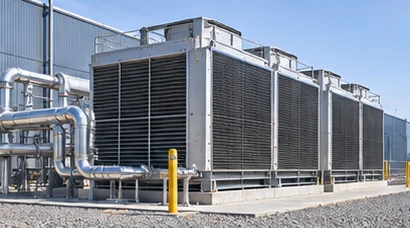
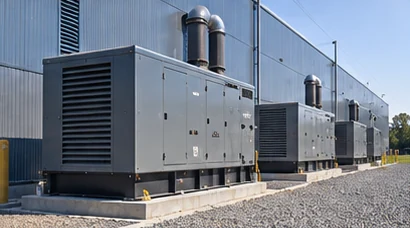
Create a one-page map of utility feeds, on-site generation and fuel, transfer and switchgear, cooling plant, controls and critical network paths. Identify dependencies shared across suites, buildings, tenants or upstream contractors. For liquid-cooled high-density equipment, trace boundaries from the facility system to the tenant equipment and identify ownership, warranty and contractual acceptance. The Department of Energy’s Federal Energy Management Program design guide provides engineering context for power, cooling and facility design. Its guidance is useful in a risk workshop. Policy response and engineering suitability still depend on site configuration, contracts and the selected coverage.
Ask engineering how the site behaves when two linked dependencies are impaired or when maintenance takes one out of service. Determine restoration steps at an operational level, contractor and equipment availability, time to test, and time needed to serve contracted capacity after repair. Have finance separate alternate equipment rental and expediting from lost contribution margin. For risks involving controls or a cyber event, identify whether there is physical damage, loss of functionality, contract exposure or investigation cost. Review separate technology and cyber terms before treating those losses as eligible for a property-funded layer.
| Stage | Evaluate insurance treatment | Test cash timing |
|---|---|---|
| Procurement and delivery | Transit, storage and equipment ownership or insurable interests | Deposits, lead times and alternate suppliers |
| Construction and testing | Builders risk and equipment breakdown terms, testing restrictions and handover | Repair draws, expediting and revised milestone schedules |
| Service operation | Property interruption, utility and dependent exposure terms, cyber and technology wording | Alternate capacity, service credits, lost margin and reimbursement lag |
Evaluate a Cooling or Power Failure on Several Ledgers
Suppose a hypothetical equipment event requires $480,000 in repair and expediting, while recovery delays create $640,000 in lost contribution margin and $180,000 in service-level credits payable to customers. The gross modeled impact is $1.3 million assuming the three categories do not overlap. Review whether physical damage or an equipment breakdown circumstance triggers the relevant property coverage, and how any waiting period, separate limit or exclusions apply to interruption or credits. A service obligation can arise from performance terms without creating covered interruption loss. Establish which items are eligible and when they might be paid before entering an insurer recovery as liquidity.
If the illustrative policy leaves $200,000 of eligible costs in a retained layer and the $180,000 of customer credits remain outside the coverage assumed for the model, the earliest cash view must account for both. If the affiliated operator prepays a $150,000 equipment deposit before receiving a reimbursement, carry the timing of that payment as well and reconcile whether the deposit is included in the repair estimate. Categorize uncovered cost, eligible loss, temporary advances and collateral separately. This avoids counting the same dollar twice or assuming that funds are available simply because a loss is expected to be insured.
Set the Retention After Reviewing Pooled Exposure
An organization may be able to model first-dollar workers’ compensation or predictable fleet costs without adequate data to retain meaningful infrastructure failure or downtime. Compare the distributions separately. For a multi-site owner, similar hardware, common service contractors or shared procurement can create correlated property or interruption risks. Ask how occurrences are defined under the policy and treaty and what happens if the same equipment defect appears at several locations. Evaluate accumulation limits, scheduled asset values, equipment replacement economics and the cost of commercial or reinsurance protection above a credible layer.
For contractors, examine general liability, design responsibilities, performance obligations and assumptions about utilities, fuel supply or cooling interfaces. Claims alleging design or professional errors can have different triggers and coverage from allegations of accidental third-party injury or damage. The fact that an engineering firm or trade contractor worked on a site does not establish which policy or retention applies. Have the insurance team map defense, indemnity, delay provisions and performance guarantees against the executed agreements.
Ask Finance to Approve Against a Capacity Plan
Use a cash stress horizon reflecting the time to stabilize service and recover claims funds. Show remaining capacity under lender facilities, restrictions on letters of credit and requirements to maintain property or excess insurance at facility level. Ask who pays service credits and pays to mobilize a replacement unit, and whether affirmatively acceptable risk transfer would survive an increase in rack density or a transition to on-site generation. Set review points at material construction handovers and when engineering assumptions change. Executives should be able to trace a dependency, responsible party, modeled interruption period, insurance trigger and committed liquidity without treating technical redundancy as a guarantee of recovery or insurability.
References
Sources reviewed November 27, 2026.
Educational information for commercial insurance discussions. Review actual policies, agreements and applicable requirements with qualified insurance, legal, tax and actuarial advisers.