Segment Manufacturing Exposures
Map facilities, products, customers, key machinery, suppliers and locations. Distinguish repeated production incidents from severe equipment failures or recalls. Review change control, quality records and product traceability. Use contracts to identify who bears obligations for customer property or components.
Reconcile Claims and Recovery
Allocate claim costs by product family, site, operation and year when dependable. Review litigation, corrective actions, recoveries and insurance participation. Products liability, recall and interruption are distinct exposures with different coverage architecture. Review wording individually.
Model Linked Events
Test a production equipment failure that interrupts several lines and delays deliveries. Review spare capacity and time to replace components. Model injury claims, fire exposure and external recoveries separately. Determine which correlations drive severe outcomes.
Compare Operating Capacity
Ask if management can support claims oversight, safety, administration and predictable data collection. Review bank capacity and capital priorities. Select plausible retained layers for analysis and confirm that requested coverage and insurance evidence remain available.
Create a Loss Ledger That Explains the Production System
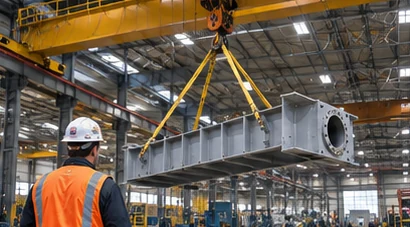
Begin with facilities and production streams. Show which lines share presses, controls, tooling, maintenance crews or utilities and which products use components from the same supplier or production batch. Link employee injuries to labor hours, work cells, staffing arrangements and job tasks. Link third-party liability allegations to products and lot history, customer use, and dates of manufacture or distribution where known. Distinguish losses handled by the business, those handled by a carrier and incidents retained in a prior program. Capture amounts at the same valuation dates before comparing plant results. A small facility can create a large group exposure if it holds the only qualified tooling or inventory for a customer program.
For temporary or contract labor, document who employs the workers, controls day-to-day activities and handles the first report of injury. Ask counsel and the broker how applicable workers’ compensation rules and the staffing agreement affect the parties. Store training and claim documentation with the appropriate entity. For applicable general-industry servicing and maintenance, OSHA’s control of hazardous energy standard sets minimum requirements for specified exposures involving unexpected energization, startup or release of stored energy. Have safety staff determine its scope and exceptions at each facility. In the financing review, use actual audit findings and completed corrective work to assess whether the risk profile presented to carriers reflects operations.
Compare Claims With Different Economic Triggers
When an industrial component fails at a customer site, a customer could allege physical damage, business interruption, warranty obligations or the cost of removing installed products. Product liability, withdrawal expense, contractual performance and the insured’s own property loss can be different exposures. Evaluate actual policies for trigger, insuring agreement, exclusions, definitions, applicable limits and defense treatment. A warranty reimbursement that is part of the business’s product economics should appear in operational forecasts separately from an assumed insurable liability.
| Exposure | Evidence to gather | Question about retaining it |
|---|---|---|
| Employee injury | Claim values, labor hours, tasks and return-to-work records | Is experience stable by operation when expressed per unit of exposure? |
| Product loss | Batch, distribution, customer contract and cause analysis | Could one quality event affect multiple insured years or customers? |
| Equipment and interruption | Critical spares, lead times, ramp-up history and dependency diagrams | Can the company finance repair and lost margin when a common asset fails? |
| Customer property | Bailment terms, custody records and insured values | Who funds restoration while responsibility is unresolved? |
Work Through a Production Stoppage in Cash Terms
Assume a single press supports two lines. A breakdown requires $240,000 in repair costs and two months of downtime. A temporary outsourcing arrangement and expediting together cost $175,000, and unavoidable lost contribution margin totals another $260,000 after mitigation. The gross modeled operational effect is $675,000 before any policy recovery. The accounting team should test which costs overlap, which are avoided, and when each is paid. If an insurance illustration assumes $500,000 of eligible covered loss and a $100,000 per-occurrence retention, the modeled retained portion of covered loss is $100,000 and the other $175,000 remains outside the assumed covered amount. Treat eligibility and eventual reimbursement separately because engineering review, coverage and documentation can lengthen settlement.
First-party insurance comparisons need matched assumptions. Verify the cause of loss that triggers coverage, the treatment of equipment breakdown and wear, terms applicable to extra expense, and the time and dollar limits on interruption. Review dependent suppliers, power, water and other utilities independently. If alternate manufacturing takes several weeks to qualify, model that period. A model using only the stated vendor lead time may miss commissioning, product testing, customer approval and the ramp back to normal yield.
Test Aggregation Before Setting the Layer
For the casualty proposal, ask how a batch or design issue is treated when it reaches more than one customer. Obtain explicit definitions of occurrence, aggregation, defense expense, policy period and exhaustion for the fronting policy and treaty. For property and equipment, determine whether assets share roof, utilities, suppression, critical controls or finished goods inventory. Ask the broker and engineer to reconcile probable loss scenarios with the actual scheduled locations and terms. A small value at one location can be the largest interruption contributor if an alternative plant cannot make the product.
Stress design changes, acquisitions, new markets or expansion of contract manufacturing. For example, a facility that adds a new process may inherit exposure to products sold before the acquisition and introduce a separate interruption dependency. Review who bears pre-close claims, what insurance remains in place, when the acquired site can be added to the program and how security changes. Then rerun assumptions formerly based on different operating margins, product mix or entity structure. Financing needs to reflect the future production footprint.
Bring a Manufacturing Decision to the Board
Put credible retained scenarios, available limit and timing of cash side by side. Ask the production lead which maintenance or redundant capacity investment materially lowers the expected loss. Ask finance how much cash can be tied up in both new security and a plant recovery, and how liquidity would change if a commercial insurer reimburses part of the cost after several months. Ask legal and the broker how quality agreements and customer insurance conditions change who funds rework or recall. Require measurable review triggers tied to new product families, line capacity, supplier concentration or changes in claims development. Identify which layer the company would keep under each proposal, and be explicit about what beneficial transfer or operating control it gains in return for retaining more.
References
Sources reviewed November 27, 2026.
Educational information for commercial insurance discussions. Review actual policies, agreements and applicable requirements with qualified insurance, legal, tax and actuarial advisers.